

Ten years ago today, on Wednesday 19 October 2016, Dorico 1.0 was released. For the team that built it, that day marked the end of almost exactly four years of very hard work; for musicians everywhere, it was the first day they could get their hands on what we had been making. And for all of us, as it turned out, it was only the very beginning.
When I wrote a post to mark Dorico’s fifth birthday back in 2021, I said that in many ways we were still only just getting started. Looking back now over a full decade, I think that was truer than I knew at the time. In the last ten years we have shipped six major versions, dozens upon dozens of free updates, an entry-level edition, a free edition, an app for iPad, and a Dorico-powered Score Editor inside Cubase. We have seen the landscape of music notation software change in ways none of us could have predicted. And through it all, a community of musicians from every corner of the world has grown up around Dorico, cheering us on, keeping us honest, and – most importantly of all – making some truly beautiful music.
So please indulge me as I take a stroll down memory lane, and look back at some of the milestones of Dorico’s first ten years. Pour yourself a cup of tea (or something stronger): this might take a while.
Before the beginning
Of course, Dorico’s story doesn’t really begin in October 2016. It begins on 5 November 2012 – which, as long-time readers may remember, happened to be my birthday – when a small group of us who had previously worked together on Sibelius started work at Steinberg on a brand new scoring application, with no name, no code, and a very long to-do list.

The team gathers round to watch the first edit be made.
Those first few months were spent largely thinking, talking, and listening. In February 2013 the whole team decamped to the London headquarters of the Musicians’ Union to sit down with working composers and copyists and hear what they needed from the next generation of notation software, and a few weeks later I lifted the curtain a little on what we were up to in a post about our first five months. That became the first of fifteen instalments of the development diary that ran over the following three and a half years, charting everything from our unit tests to beam grouping and sloping, casting off, and the creation of our music font, Bravura, along with the Standard Music Font Layout (SMuFL) that has since been adopted right across the industry.
By the time I wrote the final instalment a couple of weeks before release, I had written more than 35,000 words about a piece of software that nobody outside the company had yet been able to use – longer, I noted at the time, than Animal Farm, though happily still a good deal shorter than Behind Bars. Along the way we had given the Cubase audio engine a heart transplant into our new application, and in May 2016 we had finally revealed its name: Dorico, in honour of Valerio Dorico, the 16th-century Roman music engraver. I will never stop being grateful to those of you who followed along through all of those years of nerdy detail, long before there was anything you could actually buy.
2016–2017: Dorico 1, and a busy first year
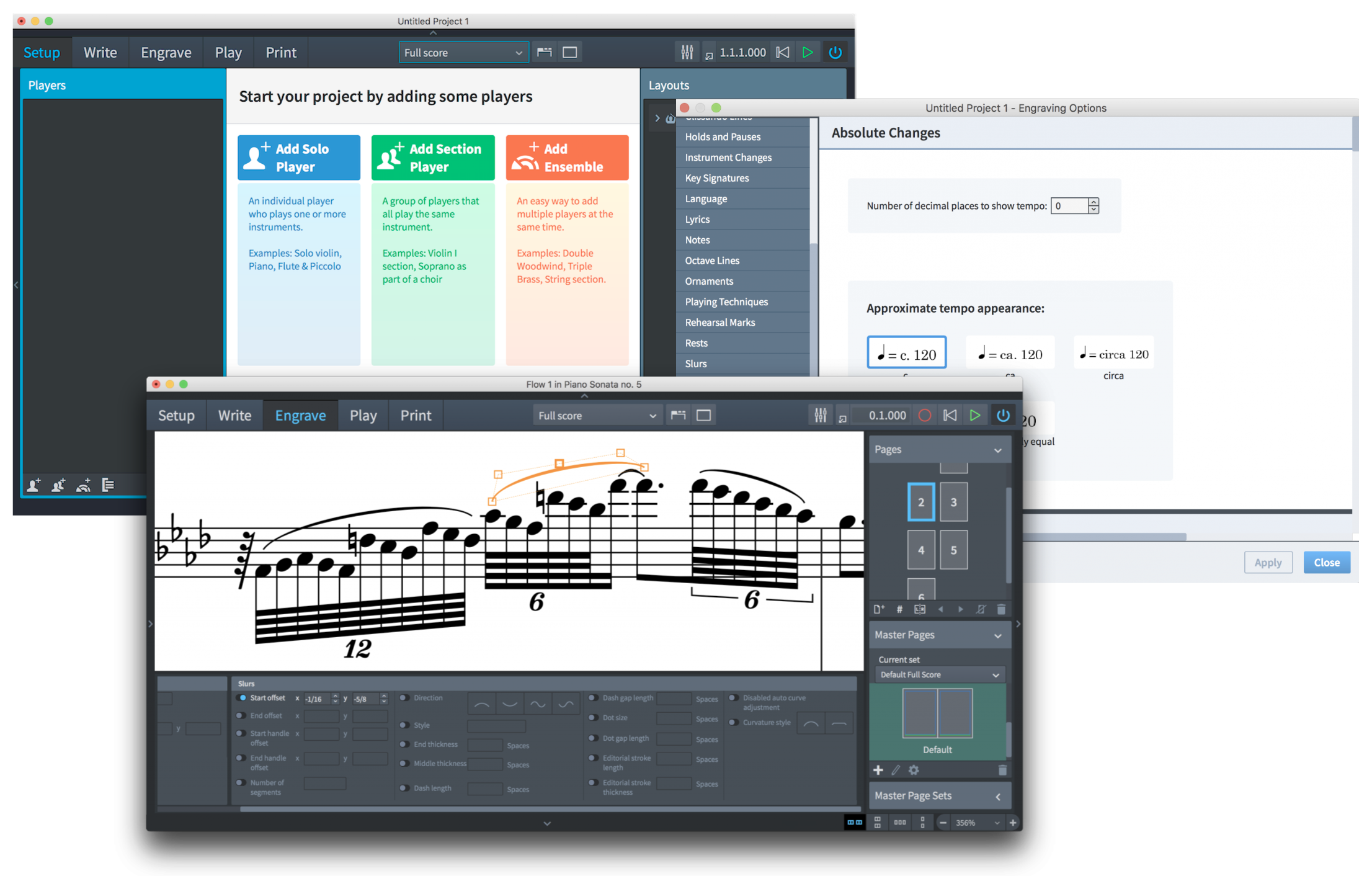
The launch week itself was a whirlwind. On the evening of 19 October 2016 we welcomed more than 150 guests to Bush Hall in Shepherd’s Bush, with more than 1,000 more watching the live stream, and the evening opened with DORICOverture, a piece we commissioned from Thomas Hewitt Jones and performed by Thomas with Ensemble Perpetuo. Two days later I was in Vienna for a second launch event at the Synchron Stage, where the Radio.String.Quartet performed. Believe it or not, Dorico 1.0 was even available on DVD-ROM. I was so busy that week that I didn’t manage to write a blog post announcing the release until two weeks later.
Dorico 1.0 introduced the ideas that still sit at the heart of the application today: players, flows and layouts; the separation of Setup, Write, Engrave, Play and Print modes; popovers and the insertion of music without fighting against barlines and time signatures; and an engraving engine built from the ground up to produce beautiful results by default. It also, as plenty of you were quick to point out, lacked some important things – chord symbols and repeat endings among them. We knew that, and we said from the outset that we would only add features when we could add them properly.
So we got to work. Dorico 1.0.10 arrived in November, 1.0.20 in December, and 1.0.30 at the end of February 2017; between them they brought more than 500 improvements and fixes. Dorico 1.1 in June 2017 brought chord symbols, repeat endings, and much more, and a graphical chord symbol editor followed in 1.1.10 in August. Then, in December 2017, Dorico 1.2 arrived with some big features of its own, introducing Dorico’s unique approach to cues and a genuinely new take on unpitched percussion, where the same music could be shown on a five-line staff, single-line instruments or grid. By the time 1.2.10 shipped in February 2018, we had delivered seven significant updates to Dorico 1 in less than eighteen months.
2018: Dorico 2, and Dorico becomes a family
When Dorico 1.0 arrived in October – at the wrong end of the year for educators, and right on top of the usual Cubase release – we knew we would have to grasp the nettle and shorten a development cycle to get our major releases into the spring. So just three months after 1.2.10, on 30 May 2018, we released Dorico Pro 2 and Dorico Elements 2. With the arrival of Elements, our new entry-level edition supporting up to 12 players, Dorico became Dorico Pro, and for the first time it was a family of products rather than a single application.
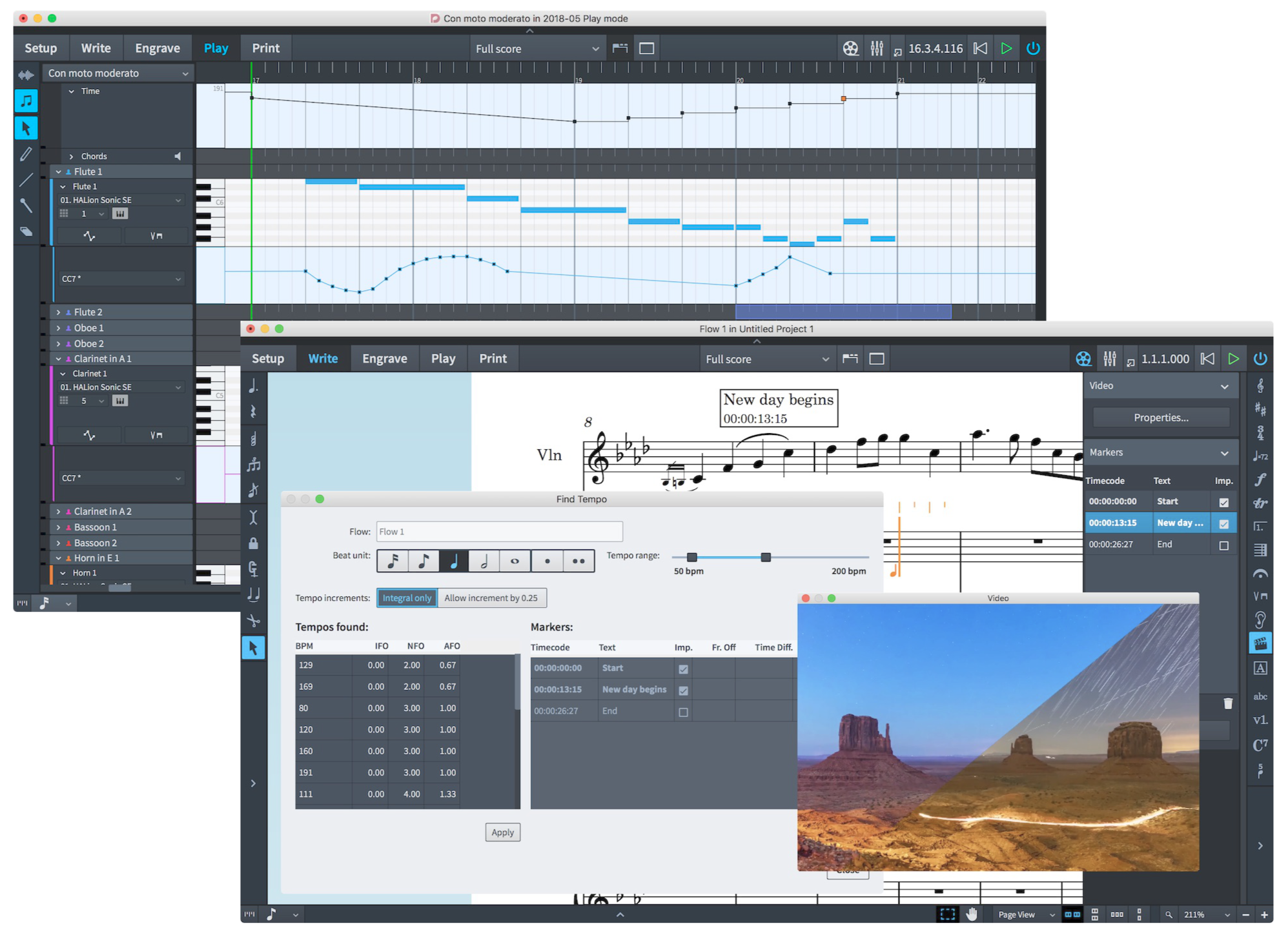
Dorico 2 was very much aimed at two groups of musicians we felt were under-served: those working in music for media, and those working in any idiom built on a rhythm section. It brought video with rock-solid sync (thanks to the shared audio and video engines from Cubase and Nuendo), timecode, markers and the Find Tempo window; large time signatures for film scores; rhythm slashes and bar repeats; MIDI automation lanes and a time track in Play mode; and our handwritten music font, Petaluma, which my colleague Anthony took on and brought to life in record time. On the same day, NotePerformer 3 arrived with support for Dorico, the beginning of a fruitful partnership with Arne Wallander that continues to this day.
But for me the real star of Dorico Pro 2 was divisi. For eighteen months I had been explaining in every demo that section players can divide… and then sheepishly adding that they couldn’t yet. Dorico 2 made good on that promise, with staves that appear only where they are needed, unison music filled in automatically before the split, and divide arrows added for you.
The rest of 2018 was just as busy: swing playback and a notehead editor arrived in Dorico 2.1 in August, and Dorico 2.2 in November brought live MIDI recording, playback of repeat structures with jumps, and jazz articulations. That summer I also took my seat at the Theatre Royal Haymarket to watch Broken Wings, a new West End musical whose performance materials had all been produced in Dorico – the first of many times I’ve had the privilege of hearing music that Dorico helped bring to life.
2019–2020: condensing, guitars, and a free Dorico for everyone
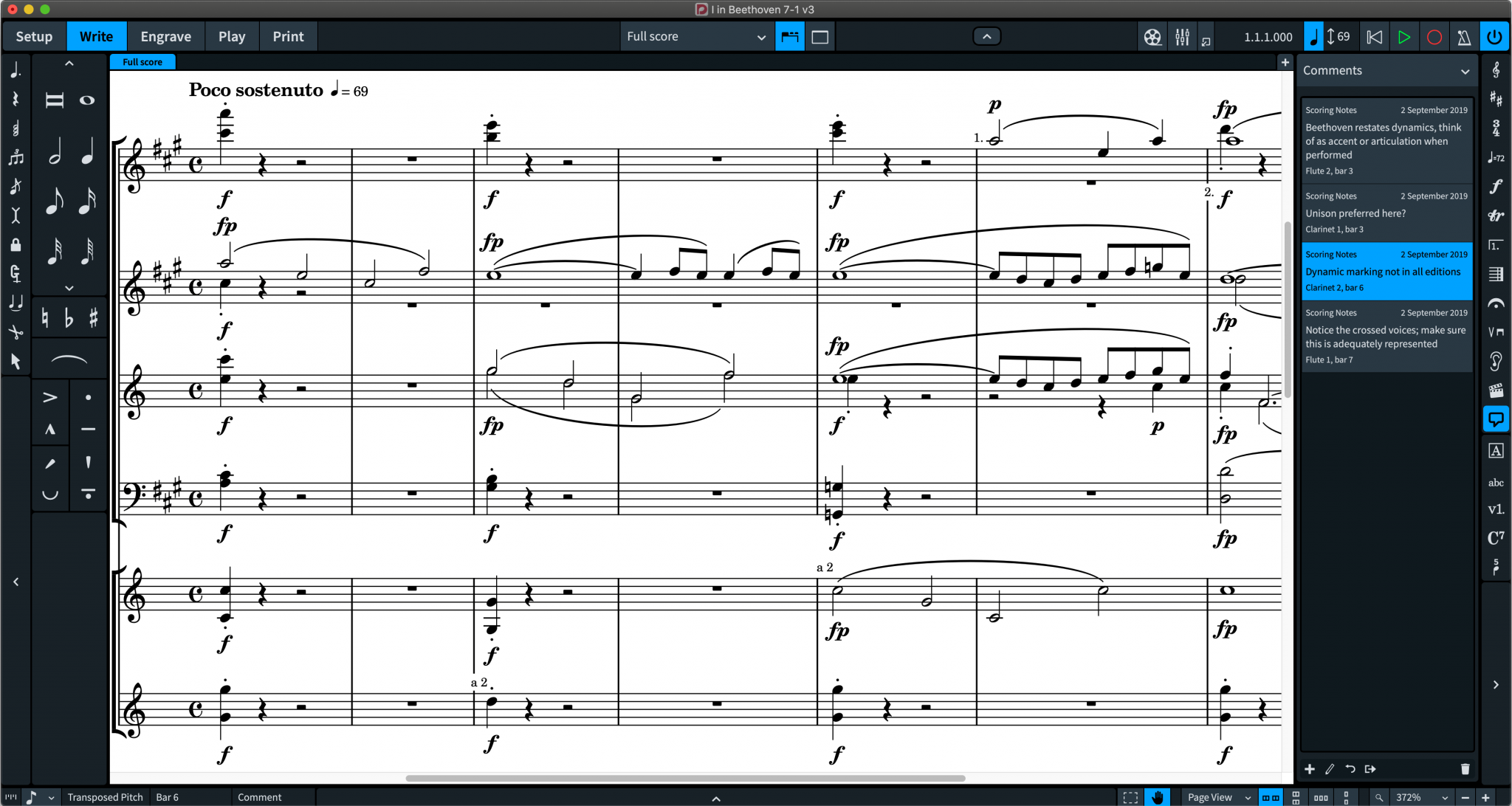
If Dorico 2 was about filling gaps, Dorico 3, released on 5 September 2019, was about leaping ahead. Its headline feature, condensing, could automatically produce a condensed conductor’s score with a single click while keeping every benefit of linked parts and automatic collision avoidance. I described it at the time as the fourth great leap forward on the Mount Rushmore of computer engraving, and (not that we’re counting) our team has had a hand in three of the four. Condensing was something we had been planning since long before 1.0, and many of Dorico’s foundational architectural decisions were made precisely so that it would one day be possible.
Dorico 3 also brought comprehensive guitar notation – tablature as a second view of the same music, chord diagrams that think in shapes the way guitarists do, left- and right-hand fingering, bends and more – plus smart harp pedalling, comments, custom playback templates, a velocity editor, and a complete overhaul of Write mode navigation. To launch it, we commissioned Dorico Prelude from Segun Akinola and recorded it with the Chamber Orchestra of London at Angel Studios, just up the road from our office. Earlier that year I had also spent a very special evening at the end of a recording session for Avengers: Endgame, interviewing Alan Silvestri, whose team used Dorico to prepare the score for what would become the highest-grossing film of all time.
On 16 January 2020, alongside Dorico 3.1 with its condensing changes, dynamics lane and Lines panel, we introduced Dorico SE: a completely free version of Dorico for (at first) up to two players, with the same notation and engraving engine as its bigger siblings. Together with Dorico for iPad, it grew our community by tens of thousands of musicians in its first couple of years alone, many of whom might otherwise never have tried Dorico at all.
Then the world changed. Dorico 3.5 was built in large part with the whole team working from their kitchen tables, and arrived on 20 May 2020 with pitch before duration input (a respectful nod to Finale’s venerable Speedy Entry), figured bass that understands the harmony it represents and can even be transposed, condensing for section players and divisi, the line editors, and graphic slices. I’m still enormously proud of what my colleagues achieved in such strange and difficult circumstances.
2021–2022: Dorico comes to iPad, and Dorico 4 supercharges your workflow
We had planned to release Dorico 4 in the spring of 2021, but late in 2020 a perfect storm of circumstances – Apple’s transition to Apple silicon, delays to the next major version of the Qt framework on which Dorico is built, and the decision that Dorico would lead the introduction of the new Steinberg Licensing system – meant our plans had to change. And from that change came an opportunity to realise an ambition that went right back to our very first days at Steinberg.
On 28 July 2021, we released Dorico for iPad as a free download from the App Store. This was no mere companion app: it was Dorico, built from exactly the same code as the desktop version, capable of producing publication-quality output, with on-screen Keyboard, Fretboard and Drum Pads panels, a brand new touch-first Key Editor and Mixer built with inspiration from our colleagues on the Cubasis team, and support for Audio Unit instruments and effects. I said at the time that it was perhaps the most significant day in Dorico’s history since 1.0, and I still believe that. (The App Store, it must be said, also taught us a thing or two about how people feel about subscriptions, and in 2022 we added a one-off Lifetime Unlock purchase alongside the optional subscription.)
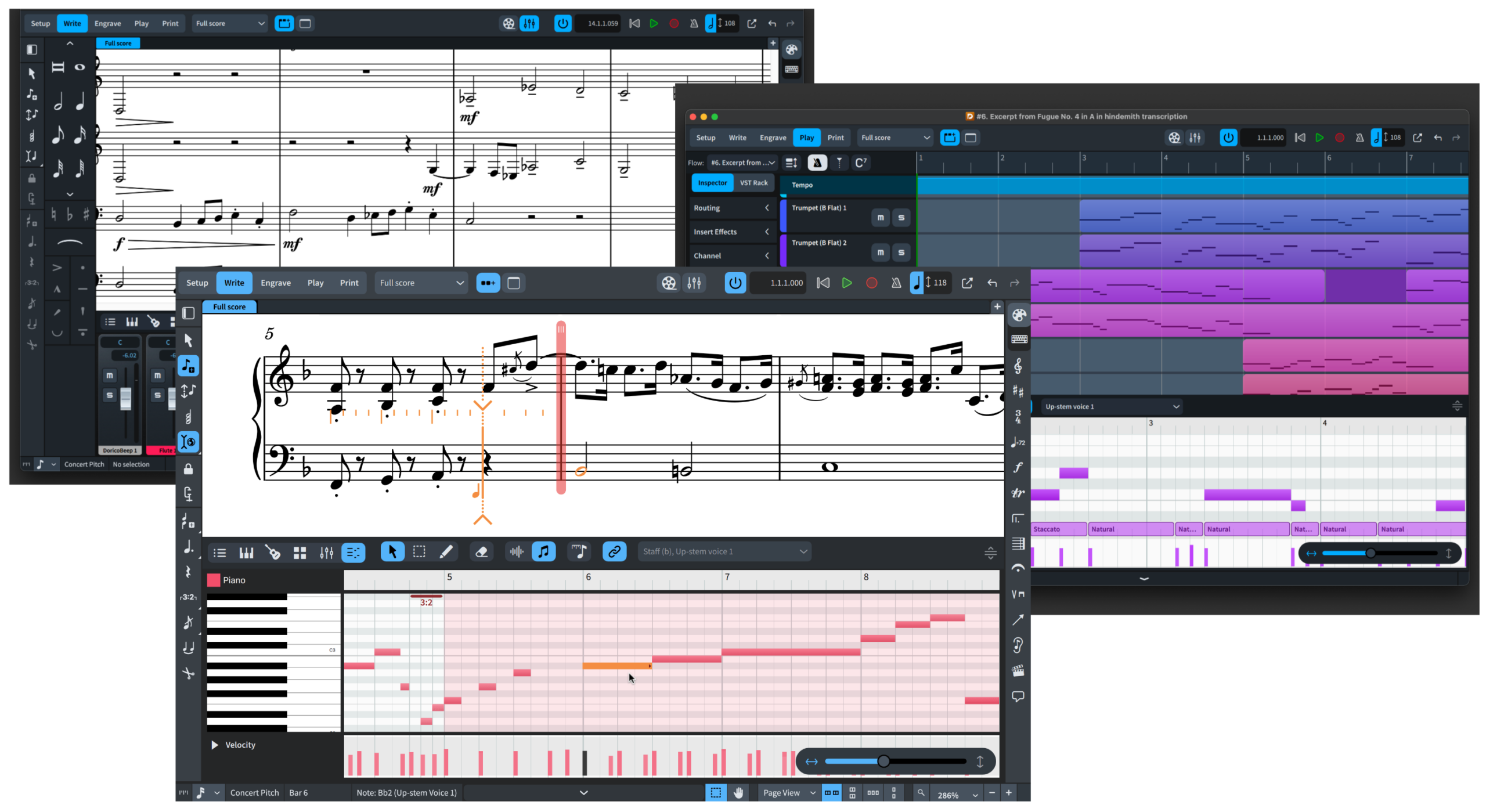
In October 2021 we celebrated Dorico’s fifth birthday, and then on 12 January 2022 came Dorico 4, some eighteen months in the making and our largest single release to that point. It brought the Key Editor and Mixer from the iPad into the desktop app’s new lower zone, a radically extended Insert mode, melodic and rhythmic transformations, much smarter MIDI import, the Library Manager, and the jump bar, which remains one of my very favourite hidden gems. Dorico 4 was also Steinberg’s first application to run natively on Apple silicon, and the first to say goodbye to the eLicenser in favour of Steinberg Licensing – the end of a pain point that had dogged our customers since 2016. Dorico Elements doubled its player limit to 24 and gained graphical editing in Engrave mode, and Dorico SE grew too.
And it was the first product we had conceived, built and shipped while working entirely from home. 2022 went on to be one of our busiest years ever, with eight releases including the return of the tempo, dynamics and percussion editors, and, in Dorico 4.3, automatic generation of voicings from chord symbols.
2023–2026: music that moves, a new home for Finale users, and Dorico 6
Dorico 5 arrived on 24 May 2023, released simultaneously for macOS, Windows and iPadOS for the first time, with the version numbers finally brought into step. Its theme was “create music that moves”, and it brought space and stage templates, pitch contour emphasis for more expressive playback, scrub playback, Groove Agent SE with MIDI trigger regions, live editing of notes with the mouse, multiple item creation and – at long last – the instrument editor. Just as importantly, we took a long hard look at what students need, and removed the player limit from Dorico Elements entirely, while Dorico SE and the free version of Dorico for iPad grew to eight players. In December, Dorico 5.1 introduced Iconica Sketch, a brand new orchestral library for Dorico Pro and Elements.
Then came the moment none of us had anticipated. On 26 August 2024, MakeMusic announced that it was ending development of Finale after more than 35 years, and partnered with Steinberg to offer Finale users a path to Dorico Pro. It was a bittersweet day. Finale was, for decades, the pioneer of our field, and I have nothing but respect for the many talented people who built it and the generations of musicians who depended on it. But it was also a day of enormous responsibility for us: suddenly, tens of thousands of musicians were looking to Dorico as their new home. We published guides to bringing your Finale projects across via MusicXML, Anthony, John, Markus and others – including the inestimable Jason Loffredo of “Conquering Finale” fame – produced a whole series of videos for switchers, and we have been delighted to welcome so many new faces to the community and the forum. If you are one of them: welcome, and thank you for giving us your trust.
That November, Dorico’s technology also found a new home of its own, as a Dorico-powered Score Editor arrived in Cubase 14. This was something we had first dreamed about very early on, and which only became possible after years of work to make Dorico’s engines reusable.

All the while, half the team had been hard at work on our next major version. Dorico 6, released on 30 April 2025, focused firmly on engraving and workflow: a Proofreading panel that quietly checks your music in the background, cutaway scores with a single click, coordination lines, custom chord symbols with their own kerning editor, condensing for doubling players, OpenType features in text, fill view, cycle playback, a jump bar that now reaches every option, and the lovely Splentino typeface. Since then, Dorico 6.1 added Etude Elements and condensing improvements, Dorico 6.2 in March this year brought significant notation improvements for repeats, guitar and more, and Dorico 6.2.20 introduced integration with Cantai, the vocal synthesis plug-in from Turing Opera Workshop. Ten years on, we are still shipping big, free updates at a pace that I think would have astonished the version of me sitting with John in the green room at the Synchron Stage in 2016.
Here’s to the next ten years
None of this would have been possible without an extraordinary group of people. To my colleagues in the Dorico team in London, past and present, and to everybody in Hamburg and beyond whose work on the audio engine, licensing, sounds, support, marketing and so much else makes every release possible: thank you. To Anthony, whose videos (and, let’s be honest, whose voice) have taught countless musicians how to use Dorico; to John, my long-time partner-in-crime, who has demonstrated Dorico on more stages and live streams than either of us could count; and to the management team at Steinberg, who have backed this team and this product steadfastly since November 2012: thank you.
And to you, dear reader: thank you most of all. Thank you to those of you who followed the development diary before there was anything to buy, who bought Dorico 1.0 on day one, who sent us bug reports and feature requests (we read them all, I promise, even the ones we haven’t got to yet), who answered each other’s questions on the forum, who taught Dorico to your students, and who used it to write, arrange, engrave and publish music that has been performed in concert halls, theatres, churches, classrooms and on scoring stages all over the world. Dorico exists for you, and it is shaped by you.
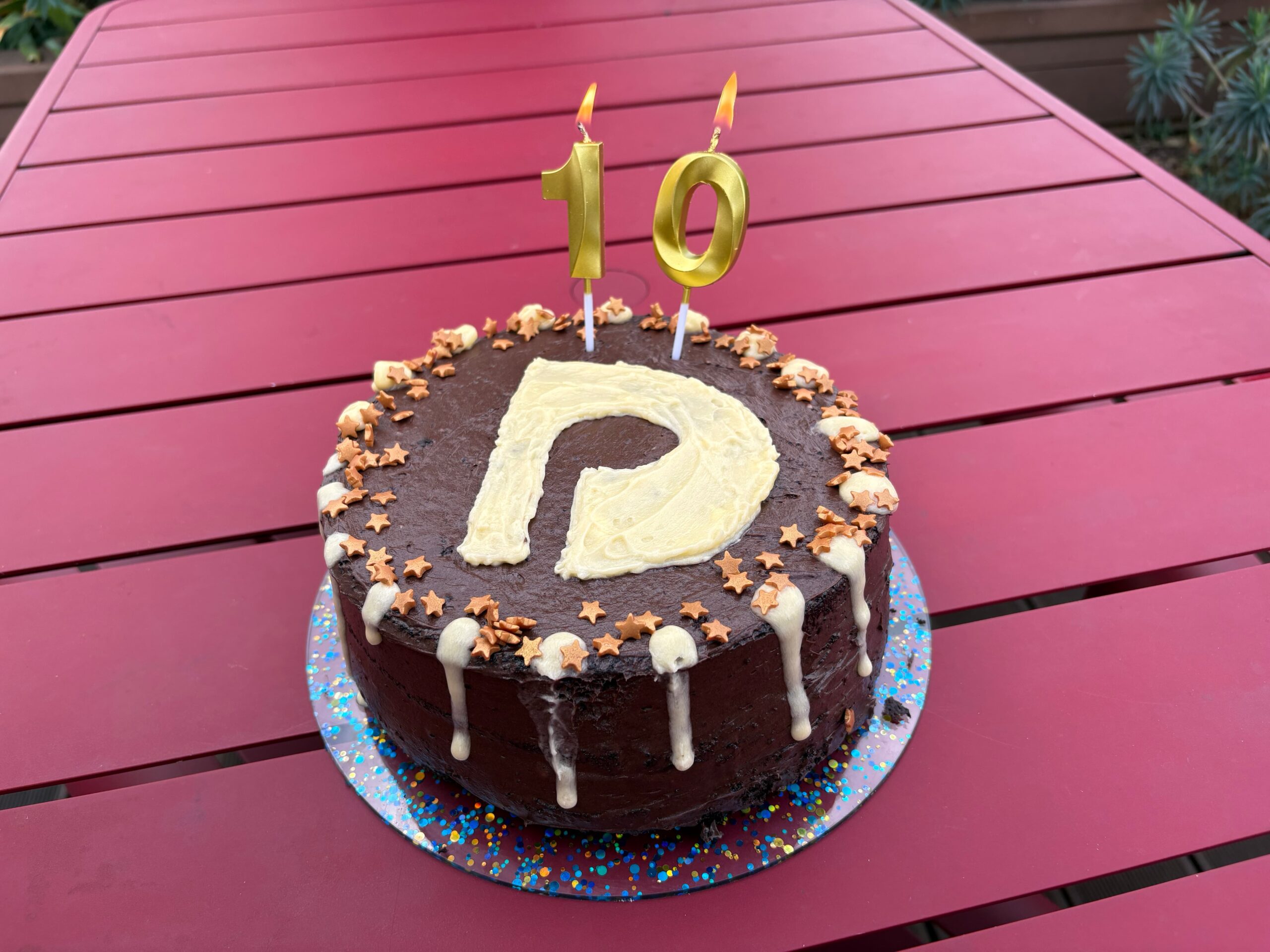
The delicious birthday cake made by my colleague Ronja.
When we sat around empty tables with our notebooks in the autumn of 2012, before we even had computers to write the software with, we had a clear vision of what we wanted to build. Every year since, we have come a little closer to realising it, and every year our ambitions have grown a little larger too. We have just as clear a vision for where Dorico is going next, and I can promise you this: Dorico will be smarter, faster, more expressive, and more deeply woven into the way musicians work than ever before. If the first ten years were about building the foundations and proving what a next-generation scoring application could do, the next ten are about building on those foundations to go places that no notation software has gone before. I have every confidence that the next ten years will be even better than the last.
Happy tenth birthday, Dorico. Here’s to the next ten years – and, as ever, I’ll see you on the forum.
Happy birthday, Dorico, and congratulations to the whole team! Thank you! 🎉🎼
Wonderful article, splendid product, and marvelous team paid and volunteer who support the produce and its users!