
This post is part of a series that aims to shine a light on projects in which Dorico has played a part. If you have used Dorico for something interesting and would like to be featured in this series, please let me know.
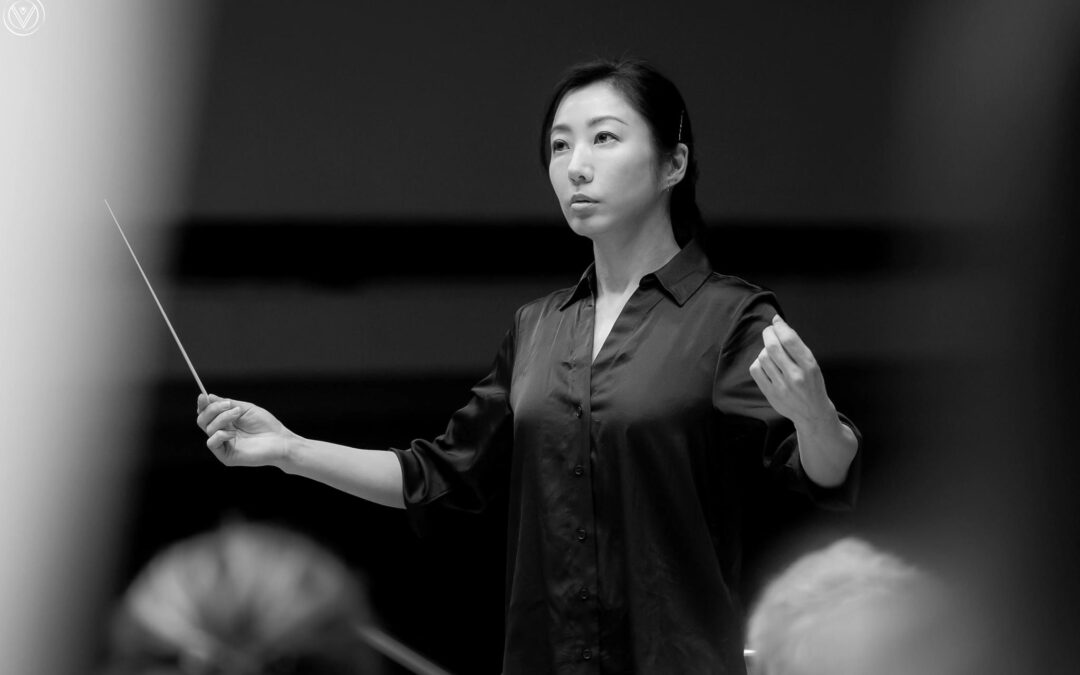
In this Dorico Showcase, we are featuring Reiko Nomura, a Japanese composer, film composer and pianist who shares her time between Sofia and Tokyo. Reiko has a fascinating and varied musical background, having worked across composition, performance, film and game music, orchestration and large-scale orchestral works. My colleague John Barron first met Reiko at the Film Scoring Academy of Europe, where she was studying for a master’s degree in film scoring and took part in Dorico workshops led by John. Reiko had started using Dorico a few years earlier, and the workshops gave her the opportunity to explore the software further as part of her studies and compositional work. Since then, Dorico has become an important part of her creative process. I caught up with Reiko to talk about her work, and how Dorico has become part of her approach to composition.
AN: Hi Reiko, could you tell us a little about yourself and your work as a composer? How did your journey into film and concert music begin?
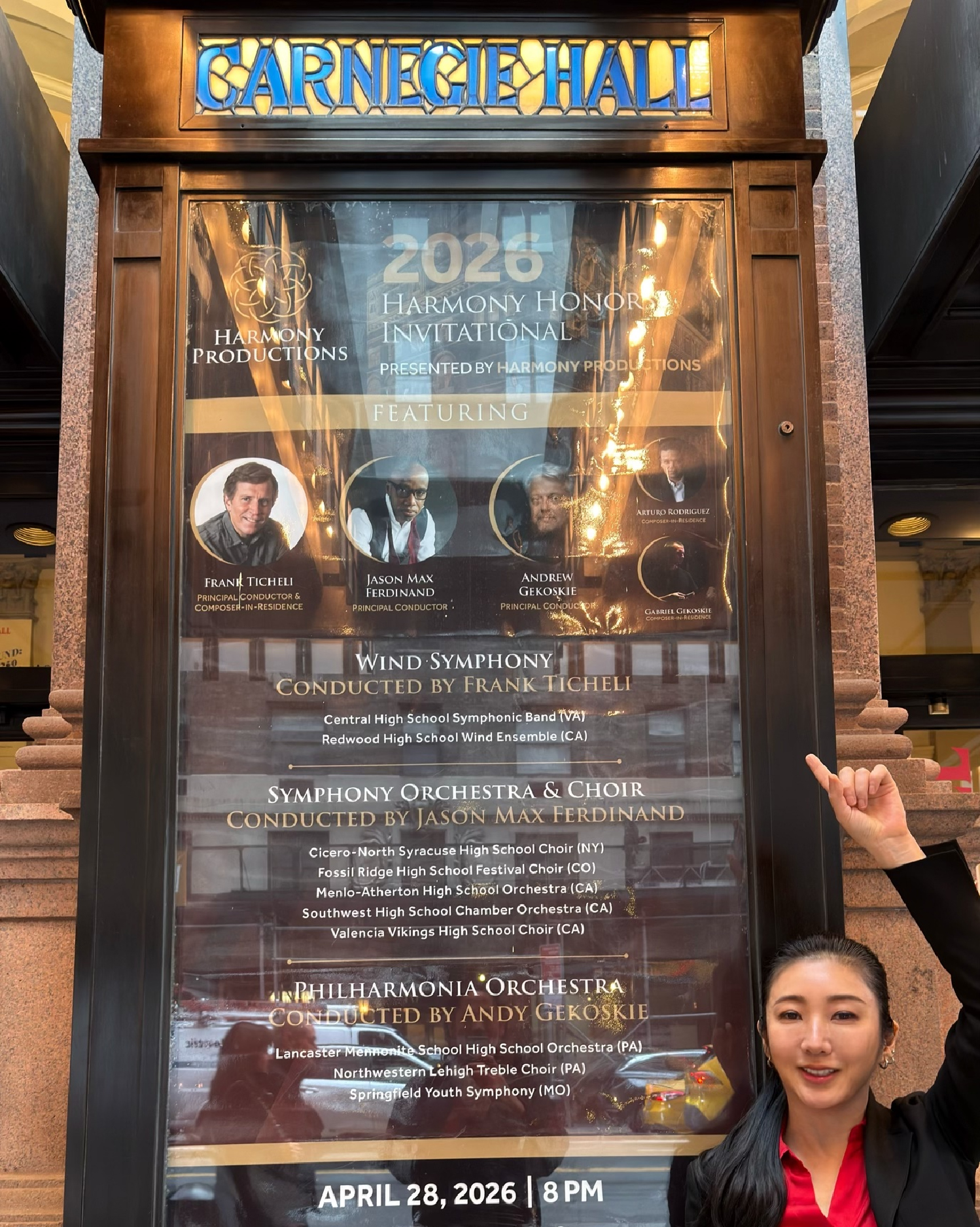 RN: I am a composer based in Tokyo and Sofia. In April 2026, my orchestral work “The Red Book” suite was performed at Carnegie Hall in New York. It is difficult to identify a single defining moment that led me into these worlds, but one of the deepest sources of my desire to become a composer was the discovery that a score can embody the composer’s thoughts and emotions. In truly great music, the score is already a work of art before a single note is performed. When you open it, you can almost see what the composer felt and what they were trying to communicate through the notes on the page. Strength, vulnerability, and emotions beyond words are inscribed in every note. I wanted to become a composer capable of entrusting everything I felt to musical notation. That desire was one of the forces that led me into the world of composition. Over the years, Dorico has become an important part of that process, helping me transform the music I hear within myself into clear, performable scores.
AN: When did you first start using Dorico, and what initially drew you to it as a composition and notation tool?
RN: I began using Dorico about six years ago, after a composer friend recommended it to me. At the time, I was just about to upgrade Sibelius, and I thought, “If he recommends Dorico, it must be worth trying.” What initially attracted me was how quickly I could turn the music in my head into notation. As I became more familiar with the software and learned to use its shortcuts, I was able to create scores much more quickly, and I sometimes felt as though Dorico understood what I wanted to do. I still remember the excitement of watching my ideas become a score, one after another, right before my eyes.
“I sometimes felt as though Dorico understood what I wanted to do.”
As I continued using Dorico, the community surrounding it became one of the things I valued most about the software. The official documentation and help resources are excellent, and the Dorico community on Facebook has helped me many times. For example, I occasionally need unconventional notation for complex asymmetric metres influenced by Bulgarian music, or for unusual attacca transitions. Even when I cannot find the answer in the documentation, Dorico users around the world often suggest a solution with astonishing speed. Composition is often a very solitary activity—a world in which you are alone with yourself and the music. But the Dorico community reminds me that people all over the world are using the same tool to create entirely different kinds of music, while helping one another along the way. I hope that, when I come across a question I can answer, I will be able to help someone in return.
“Dorico is not only a tool for writing music; it has also become a place that connects people who create music.”
AN: How does Dorico fit into your composition process today – from initial ideas through to a finished score?
RN: I begin at the piano, playing until I find something. Once an idea starts to take shape, I move into Dorico at a fairly early stage. Sometimes I record what I play directly onto the individual staves. When I am writing an orchestral work, I may compose in full score from the very beginning. Dorico’s playback capabilities are excellent, and being able to listen while I write is enormously helpful. It is especially useful for catching small notation errors that can easily escape the eye. For example, if I accidentally omit a flat or natural from a single note, I may not notice it immediately when looking at a complex orchestral score, but I can often hear the error at once in the playback. However, playback is fundamentally different from the sound produced by real musicians performing on real instruments. A live orchestra also has a distinctive sense of space and distance, created by the physical placement of the musicians and the acoustics of the hall. No playback can reproduce all of this completely, so I must also hear in my mind how the music will sound when performed by an actual orchestra. I move continually between the sound I hear in Dorico’s playback and the sound I hear internally. I change notes, transfer material to different instruments, and rework the orchestration. Dorico makes it easy to compare passages transposed into different keys, rearrange sections of music, or isolate the brass section and listen to it on its own. I explore these possibilities in Dorico and then imagine the result once again as the sound of a real orchestra. Through this continuous dialogue between playback and imagination, the work gradually reaches its final form. Playback is not simply a way of checking what I have already written. It has become part of my thinking process itself. I do not use Dorico merely to notate music that has already been composed. Part of the actual composition takes place within Dorico.
“The piano is where the music is born; Dorico is where it grows into a finished work.”
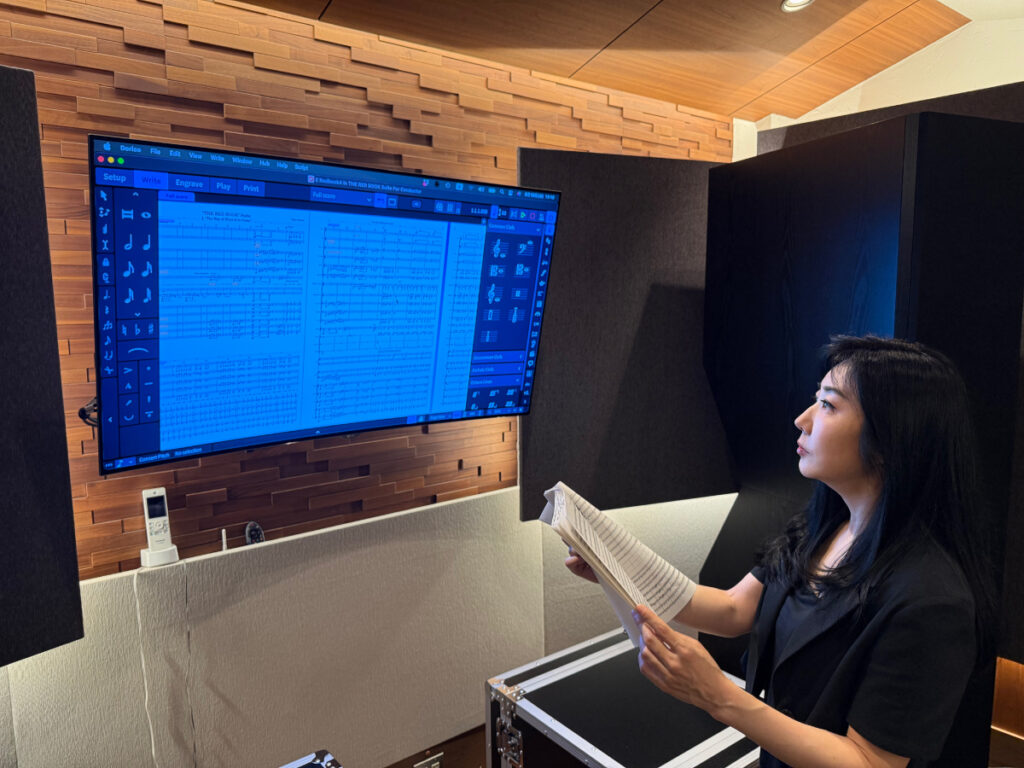
Reiko Nomura reviewing her score in Dorico.
AN: Your work spans large orchestral pieces as well as film, game, and chamber music. How do you adapt your writing and workflow depending on the scale and context of each project?
RN: Whatever the project, one of my highest priorities is to ensure that the score is clear and beautifully presented, and that the parts are easy for the musicians to read. The way I achieve this, however, changes according to the scale and purpose of the work. For concert music, I generally compose directly in Dorico and use its playback as part of the compositional process. For film and game projects, however, I usually compose in a DAW, where I can work closely with the picture and develop the mock-up. Once the music has been approved, I transfer it to Dorico to prepare the final score and parts. In a large orchestral score, I consider which instruments should be condensed and how they should be grouped. In chamber music, I think not only about the number of instruments, but also about details such as how many systems should appear on each page, so that the musical flow can be grasped naturally by the eye. Even for the same piece, a score prepared for a concert may require something different from one prepared for a recording session. Depending on its purpose, I adjust the amount of white space, the placement of page turns, and the number of cues included in the parts. A score is not simply a record of the music; it is something musicians use to bring that music to life. I therefore always consider the circumstances in which the score will be read and the music performed.
AN: For large orchestral works such as “The Red Book” suite, what does your process look like when preparing full scores and parts for professional performance?
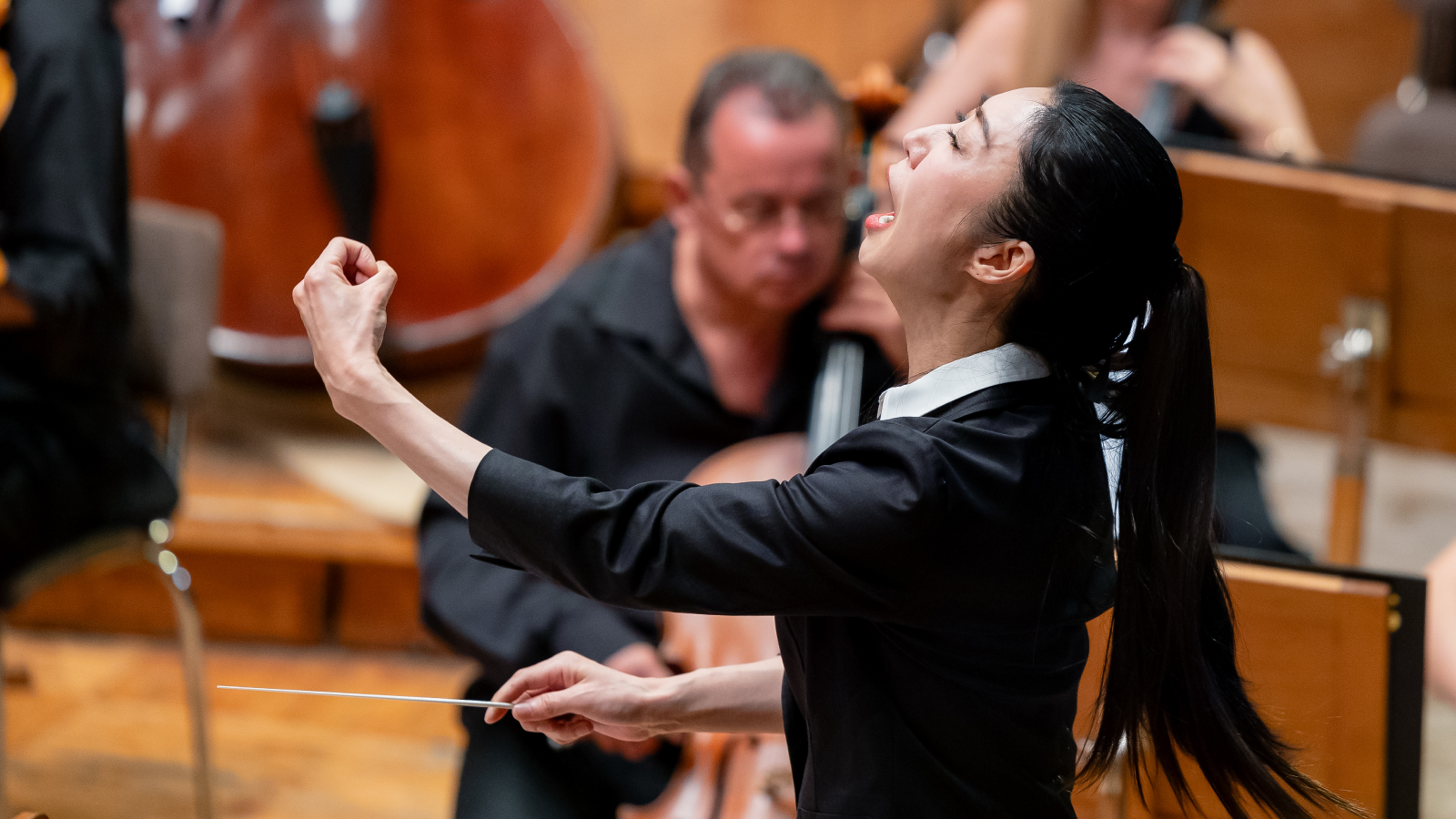
RN: “The Red Book” suite was premiered by the Sofia Philharmonic Orchestra, with me conducting. In total, we had only one hour to rehearse the piece before the dress rehearsal. This made the careful preparation of the parts essential. No matter how strong the composition is, or how exceptional the orchestra and conductor are, unclear scores or parts will waste valuable rehearsal time. Before sending out the nearly forty parts, I examine every one of them from beginning to end. I imagine myself as the musician playing that particular instrument, and I sing through each part along with the playback. This often reveals awkward details or practical difficulties that I would not have noticed by looking only at the full score. For example, unnecessarily wide leaps can make a line feel awkward to play. Asking a woodwind or brass player to enter on a very high note immediately after a long rest can also be risky. By reviewing each part from the performer’s perspective, I can identify such passages in advance and rewrite them when necessary. I also check page turns, entries following long rests, dynamics, cues, solo passages, and whether there is sufficient space for the musicians to add their own markings. I consider whether they might lose their place in a repeated passage, whether every entry is clear, and whether the musicians will be able to judge from the very first rehearsal how soft certain pianissimo passages and how loud certain forte passages are intended to be. At the same time, too much information can make a part more difficult to read. Knowing what not to write is therefore just as important as knowing what to include.
“I believe that scores and parts reveal how deeply a composer cares about the musicians who perform their work.”
As composers, we do not actually play a single note. What we do is place notes on a page. It is the musicians who transform those symbols into sound and carry the music to the audience. Our gratitude and respect for them should therefore be evident in the way we prepare our scores and parts. After a concert, whenever possible, I photograph the musicians’ parts and study the markings they have made. This allows me to see whether anything in the score or parts could be improved. Drawing on what I have learned from the musicians who have performed it, I have made a few small revisions to “The Red Book” suite.
AN: What has been the most rewarding or memorable performance of your music so far, and what made it stand out for you?
RN: The performance I still remember most vividly is the premiere of “The Red Book” suite with the Sofia Philharmonic Orchestra, which I conducted myself.
At one point during the performance, I felt the entire orchestra become one, as though we had all entered the ZONE together. In performance, there are rare moments when something happens beyond technique, preparation, or even conscious control. That evening, somehow, it felt as though every one of us reached that place at the same time. Even now, part of me can hardly believe that it truly happened. But it did. That performance also marked the beginning of an unexpected journey for the work. An American conductor who heard the premiere later programmed “The Red Book” suite with his own orchestra. Another conductor heard that performance, and in April 2026, the work was performed at Carnegie Hall in New York!!
“What began with a single performance in Sofia had crossed borders, passed from one conductor to another, and reached the stage of Carnegie Hall.”
It was a journey I could never have imagined on the night of the premiere. Each subsequent performance has been unforgettable in a different way. The musicians, conductor, hall, tempo, interpretation, and acoustics are always different. Although the composition remains the same, it takes on an entirely new form each time it is performed. There is already a profound sense of fulfilment in completing a work—in bringing into existence something that previously lived only within me. But when that music is performed by an orchestra, it is transformed once again. What once existed only inside my mind fills an entire concert hall and returns to me from the outside, through the bodies, breath, and imagination of the musicians. To create something, to see it take on a life beyond oneself, and to be there to hear it—at such moments, I realise once again: “This is why I exist.”
AN: Thanks for taking the time to talk with me, Reiko!