

Taking a stroll in Seoul
Recently, I was invited to Seoul, South Korea, to run some sessions for three groups of people across the city.
At the start of the trip, I was able to take a stroll near where I was staying to experience the mix of parks and tall buildings that seem to dominate areas of the city. However, as usual, there isn’t time for much sightseeing – I was then straight into working with the team from Avon at their office to plan the details of each session that we’d be running. Each session was designed and tailored to specific groups of people and their musical use cases, although there are common themes amongst many groups.

South Korea vs South Africa World Cup 2026
Disaster on the morning of the first session – South Korea were knocked out of the football World Cup by South Africa in their Group A match. However, it did mean we could then focus on the music, and enthusiasm from the attendees was high that afternoon as we assembled with beverages at the trendy Perch café in Gyeonggi-do.
The first session was designed for professionals and professors from the area. Some have already started using Dorico, and others were considering switching from other notation applications and therefore had specific questions about how Dorico would suit their workflows. We were able to include time to work through all their questions and found that there were many common themes from the attendees.
We discussed many different styles and types of instrumentation and how they could be handled in Dorico, as well as some speedy hints and tips for everybody – note entry! Of particular interest were features such as condensing, cues, and cutaway scores and they were impressed by how easily they can be achieved. We also had discussions about MIDI editing with the key editor and playback using a variety of VST libraries, including orchestral, jazz and vocal with Cantai and Synthesizer V. On the workflow side, we also looked at the various ways you can import music into Dorico, as well as importing and exporting Dorico files from Cubase.
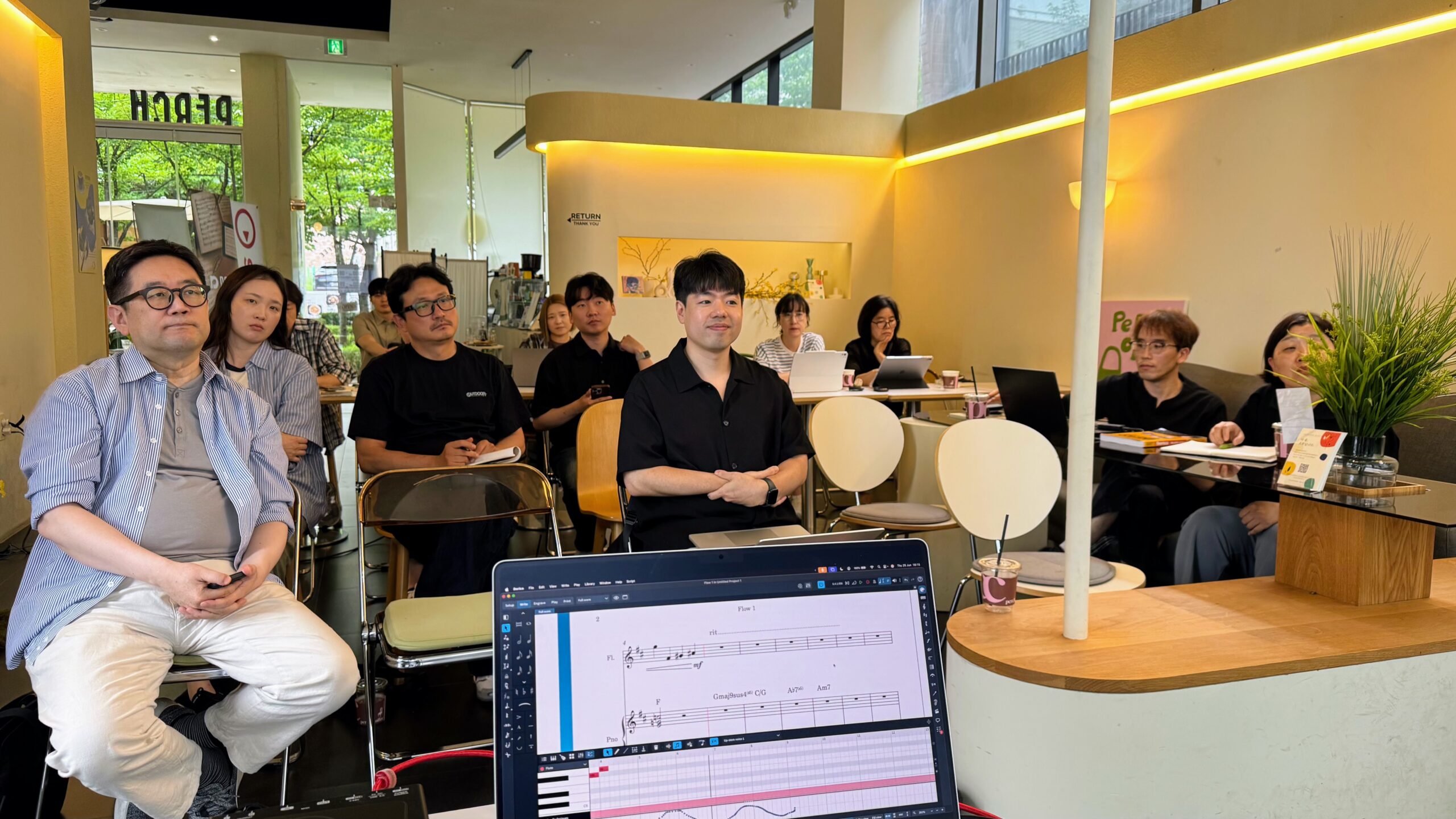
Seoul Session at Perch, Gyeonggi-do
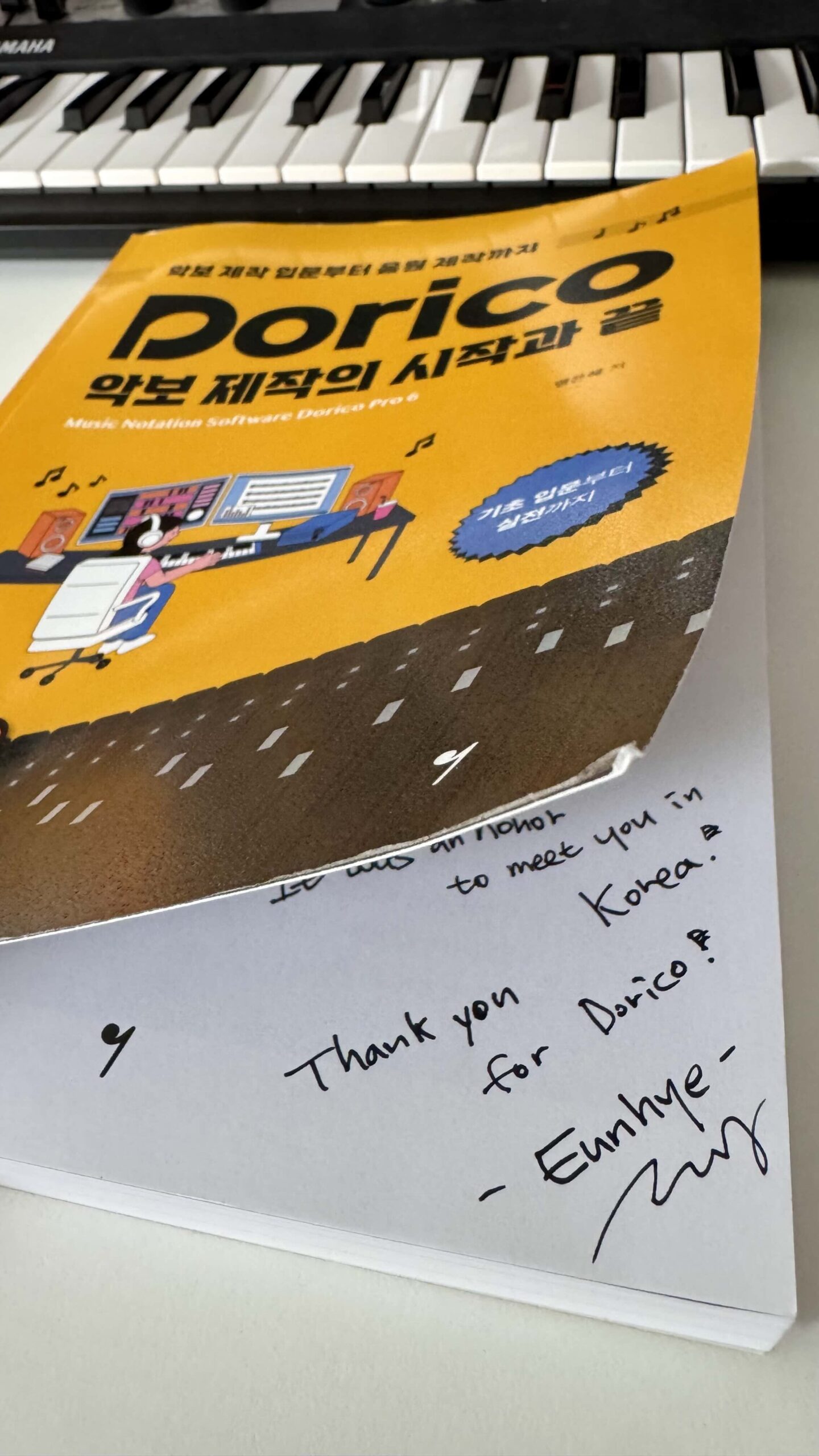
Dorico Korean book
No questions were left unanswered!
The second session on this trip was in the Seongsu-dong area and was designed for students and those just starting out with Dorico. We started with a quick history of music engraving, including stone carvings and movable type. While Johannes Gutenberg is often cited as the inventor of movable type and mechanised book production in Europe, there is growing evidence that his system was likely based on Korean bronze-plate printing from hundreds of years earlier, so the history part of the lesson was very relevant! We also discussed how music was still engraved backwards onto metal plates up until the start of the 20th century (more information in the Discover Dorico session entitled From Plate to Page), through to the current age and where the name Dorico comes from.
Also at this session were some members of the Korean military, who have already started using Dorico. I was happy to be able to help with their questions and specific use cases, such as marching-sized layouts, as I have done with some of the UK military in the past.
It really was a publishing-themed day, as I also got to meet the author of a Dorico Korea book, Eunhye – and her husband and baby! If you are interested in purchasing this book, you can do so from Kyobo Book – although I can’t guarantee that yours will be personally signed by Eunhye!
The third and final session on this trip was at Younghwa church, not too far from the very trendy Gangnam District – which I now realise is where the song is from. I did try the dance, badly, although it wasn’t helped by the fact that I was on an escalator at the time.
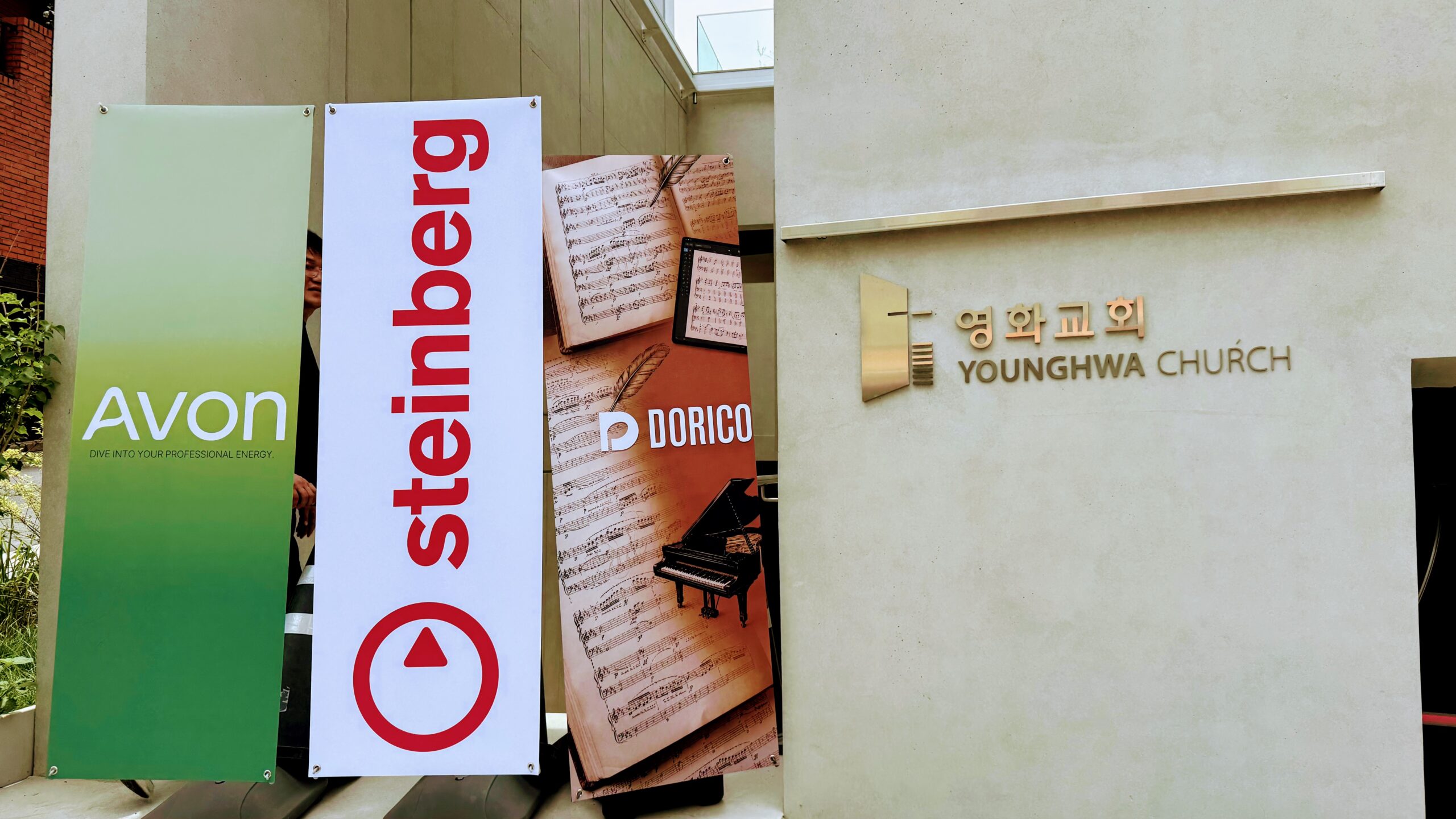
Younghwa church, Korea
We designed this session to cover all aspects of worship music, from choral and traditional through to worship band and orchestral. The questions from participants at this session probably covered the widest range of options and features, from the basics all the way through different engraving styles and notation options, including playback, of course, for voices – and Dorico is well suited to all of these, so nobody was left disappointed.
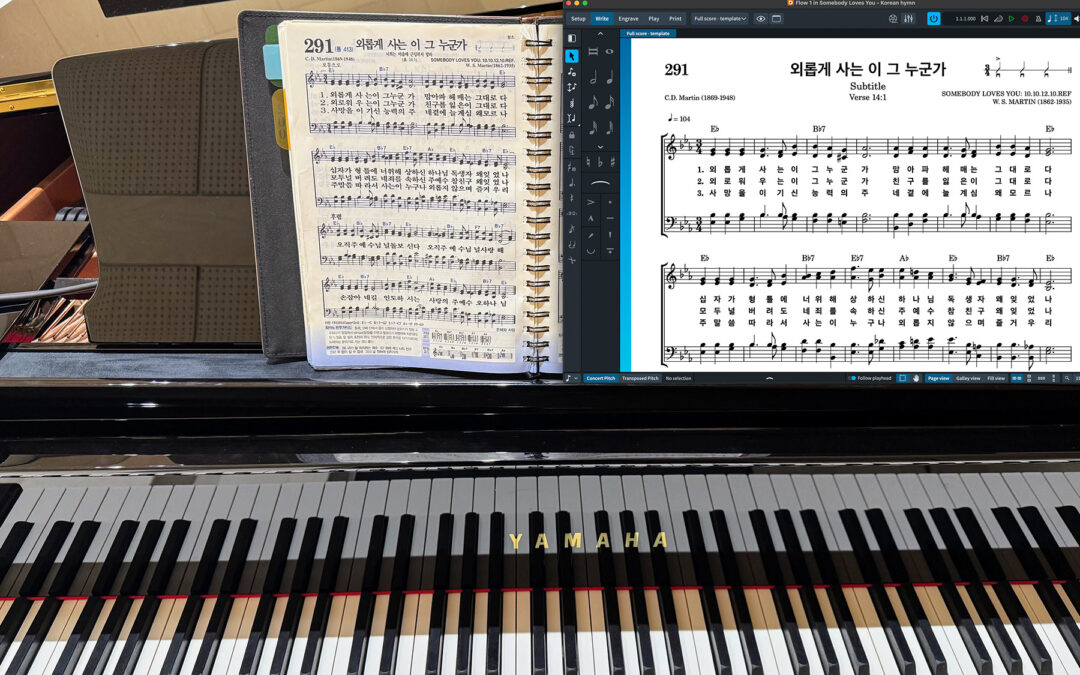
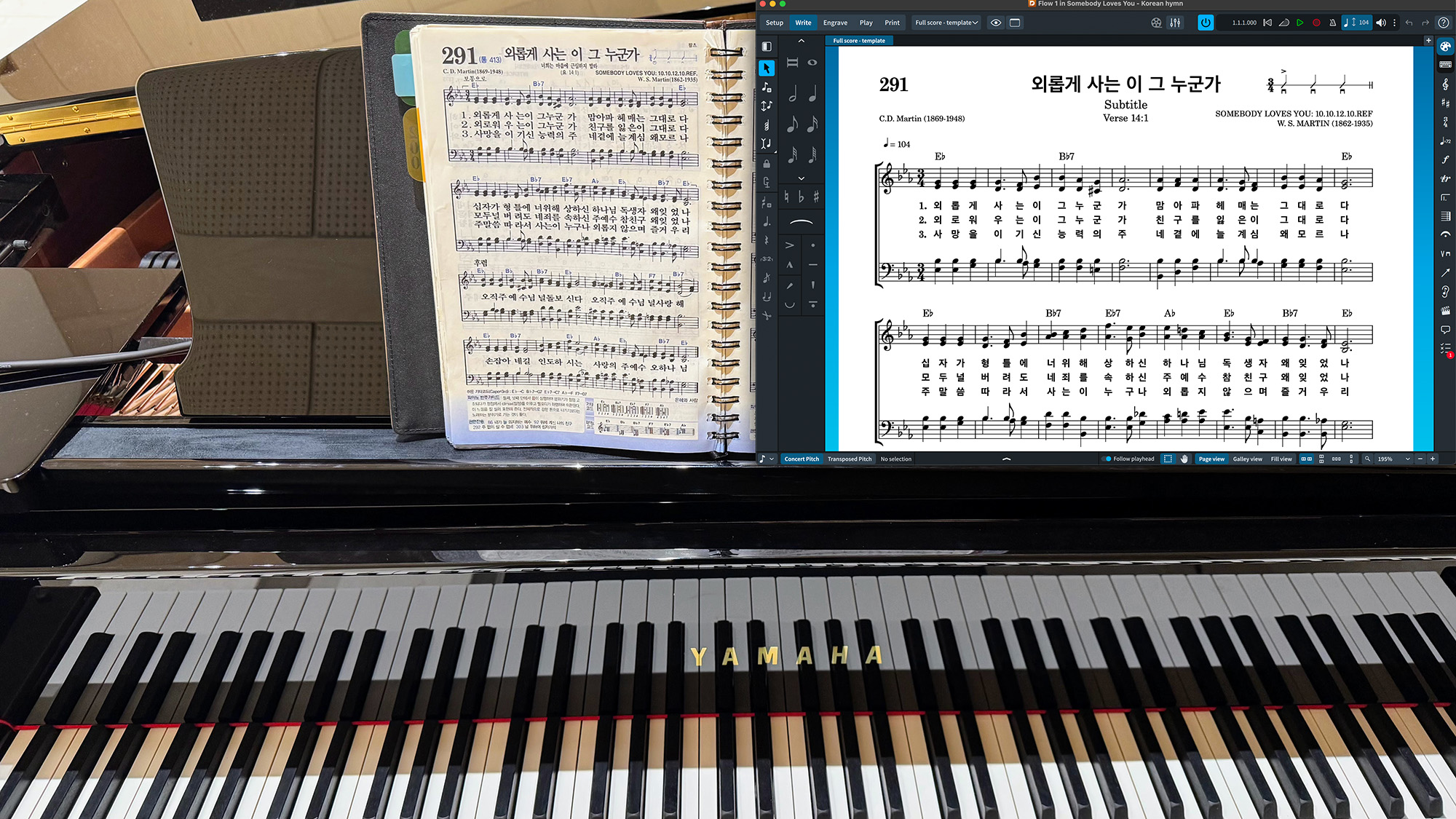
I showed examples such as the Sing! Hymnal that was prepared in Dorico by Hymnworks, and also band-style arrangements from PraiseCharts.com, who now engrave their charts using Dorico and also make the Dorico-arranged projects available to buy from their website. While setting up for the session (and being interrupted by a Roomba-style cleaner – see my Insta post), I noticed a hymnal from the church on their Yamaha grand piano. I incorporated this into the session, showing how to set up a template that matched, therefore enabling them to quickly produce more music in the same familiar style. The Korean lyrics were a challenge for me as I couldn’t type them with a UK keyboard, but I was able to copy and paste them under each note in Dorico from an online source.
We covered many other examples and features too, including, of course, that when you’ve finished a project, you have multiple options for printing, exporting as PDF or graphics – and sharing the same Dorico file with your musicians so they can use the sheet music reader option on the free Dorico for iPad version.
Lastly, no, I unfortunately don’t speak Korean, and I was therefore reliant on my fabulous hosts from Avon as translators for the sessions – and they did a fantastic job of translating both the engraving questions and my answers. Many thanks to them for their help and friendship! I hope to see them again in the future for more sessions!
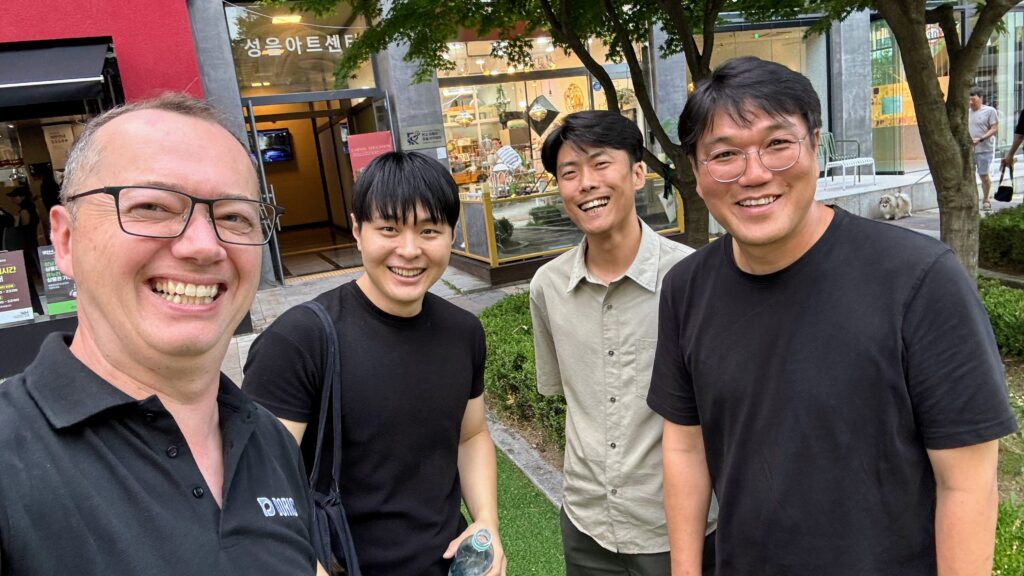
Serin and the Avon team
If you are also working in a church or need to create any of these similar styles, and will be at the Sing! Conference 2026 in Nashville this September, then please come and find me either at the Dorico session or in the Sing! Village with Hymnworks. I’ll also be available if you want to book a specific slot with me for any questions you have – bring your laptop!
I’d give anything to see you dance in Gangnam style. In the meantime congrats on what looks like a successful trip!
If they allow me to go back, I’ll bear that in mind!
Good to see Dorico expanding into the world! You are an amazing teacher, John!!!
Thank you very much
John, I finally got to read all about your time in Seoul! I’m glad you had such a great time there.