
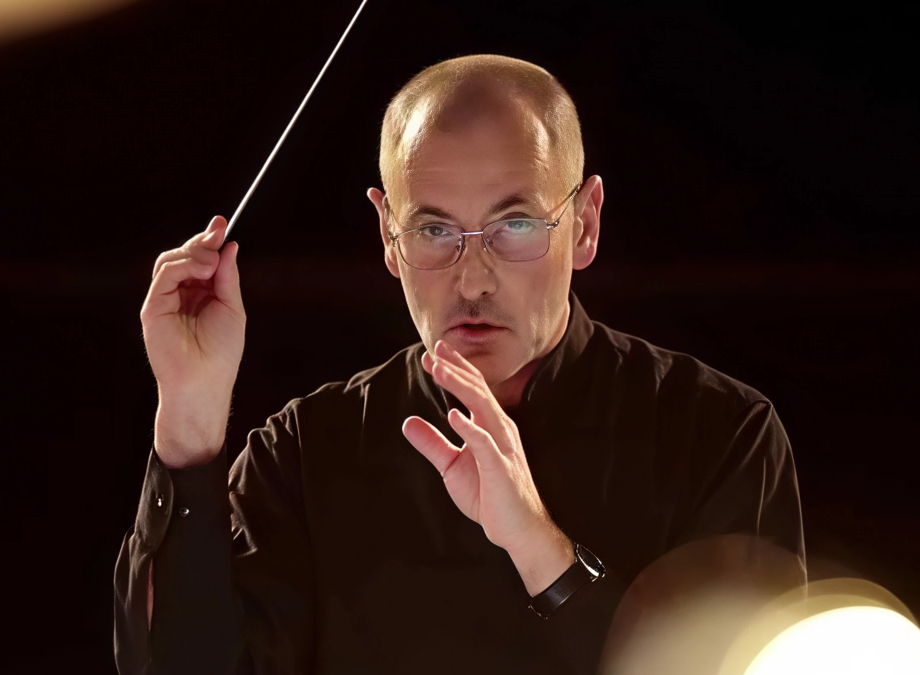
In our latest Dorico Showcase, we spoke with composer, conductor and music educator Jean-Yves Malmasson, whose musical studies include piano, composition, and the ondes Martenot at regional and national conservatories in France, about his recent publications with Universal Edition. A longtime Finale user of over thirty years, Jean-Yves discussed his publication of 42 works spanning a wide variety of ensembles and styles – from chamber music for string and brass quintets, to orchestral works – all re-edited in Dorico music notation software. In our conversation, he shared insights into the inspiration behind these compositions, as well as his experience transitioning from Finale to Dorico.
AN: Congratulations on your recent publications with Universal Edition! Could you tell us more about the works that were published? What inspired these pieces?
JM: Thank you very much! I have now 42 works published with Universal Edition, all re-edited with Dorico. I was able to do this thanks to the Scodo platform set up by UE. It is a great joy and honor for me to have been accepted by this prestigious publisher to publish my scores.
For the most part, these are rather “old” scores that I have revisited and transcribed using Dorico. These scores draw inspiration from a wide variety of sources, ranging from chamber music to large orchestras and vocal music. I am still reworking other scores that I hope to publish in the coming weeks or months, including a huge symphony for choir and orchestra that is particularly close to my heart, composed between 1998 and 2002 in tribute to the great conductor Claudio Abbado, for whom I have always had deep admiration.
Among the works already published is, for example, Le chant de Dahut (The Song of Dahut), a symphonic poem for ondes Martenot and orchestra composed a long time ago (1985), based on the Breton legend of Ys, the sunken city. There is also Les chants du séraphin (The Songs of the Seraph), a much more recent score (2016) for flute, violin, viola and cello that is very dear to me. It was inspired by the “war poems” of a young French soldier who died in 1917, rediscovered by the great writer and linguist Claude Duneton.
There are also other chamber music works for string quartet, brass quintet, and various other ensembles and styles. Other orchestral works as well, such as a symphony for mezzo-soprano, choir and orchestra composed in 2011 and entitled Quatre soleils verts (Four Green Suns).
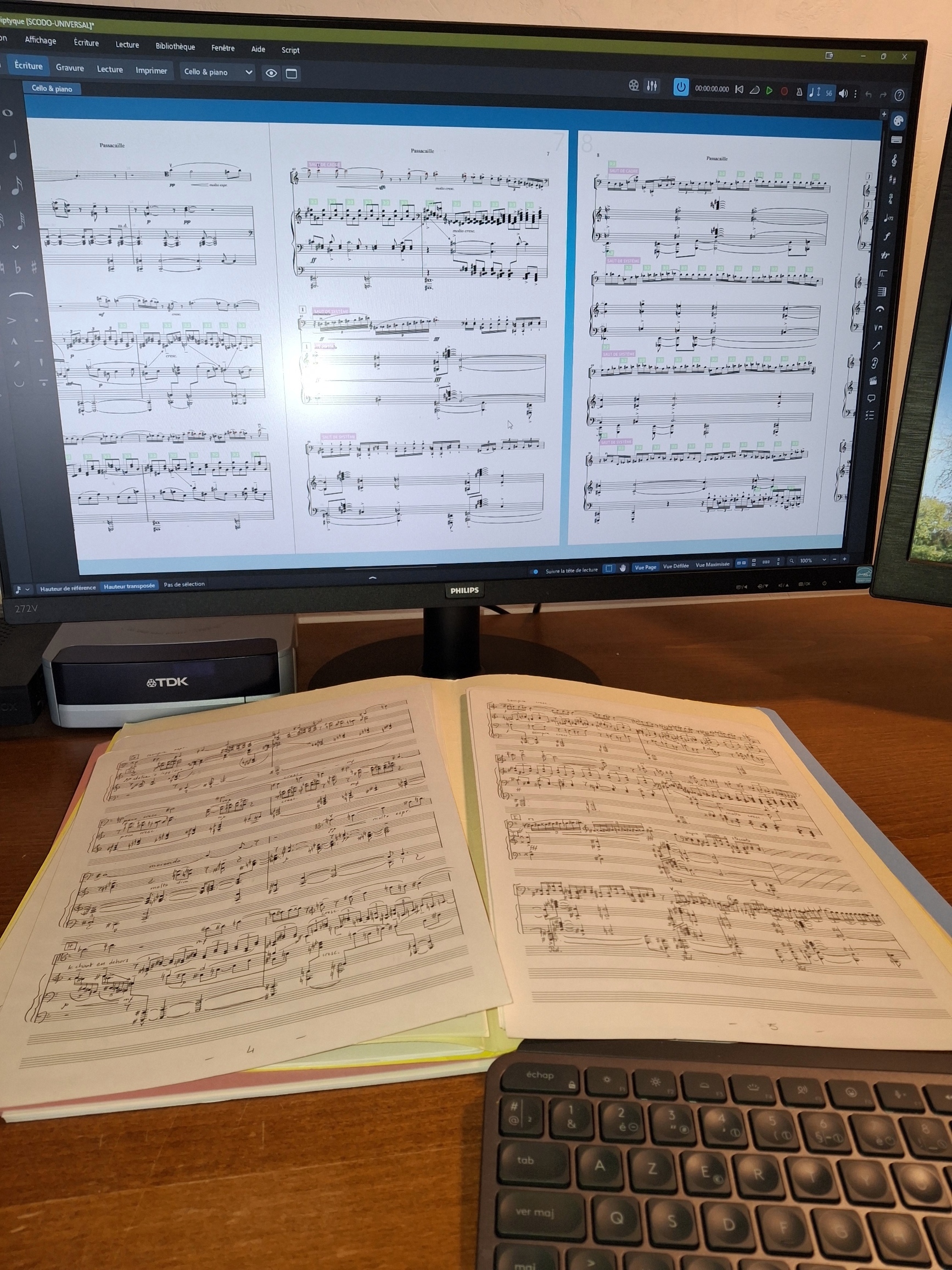
One of Jean-Yves Malmasson’s works, re-edited in Dorico
AN: Could you share a bit about your approach or process in creating these pieces? Were there any particular ideas, themes, or techniques you were exploring?
JM: It depends on the work and the character of each one. I sometimes write pieces that are rather light-hearted, even humorous, as well as more “serious” works. I often use series of 12 tones, for example, incorporating them into a rather “tonal” context. I am by no means the first to do this, but it is something I like to use for its “non-repetitive” aspect. I have also composed works based on themes by other composers, such as a cello sonata written from a theme by Alban Berg.
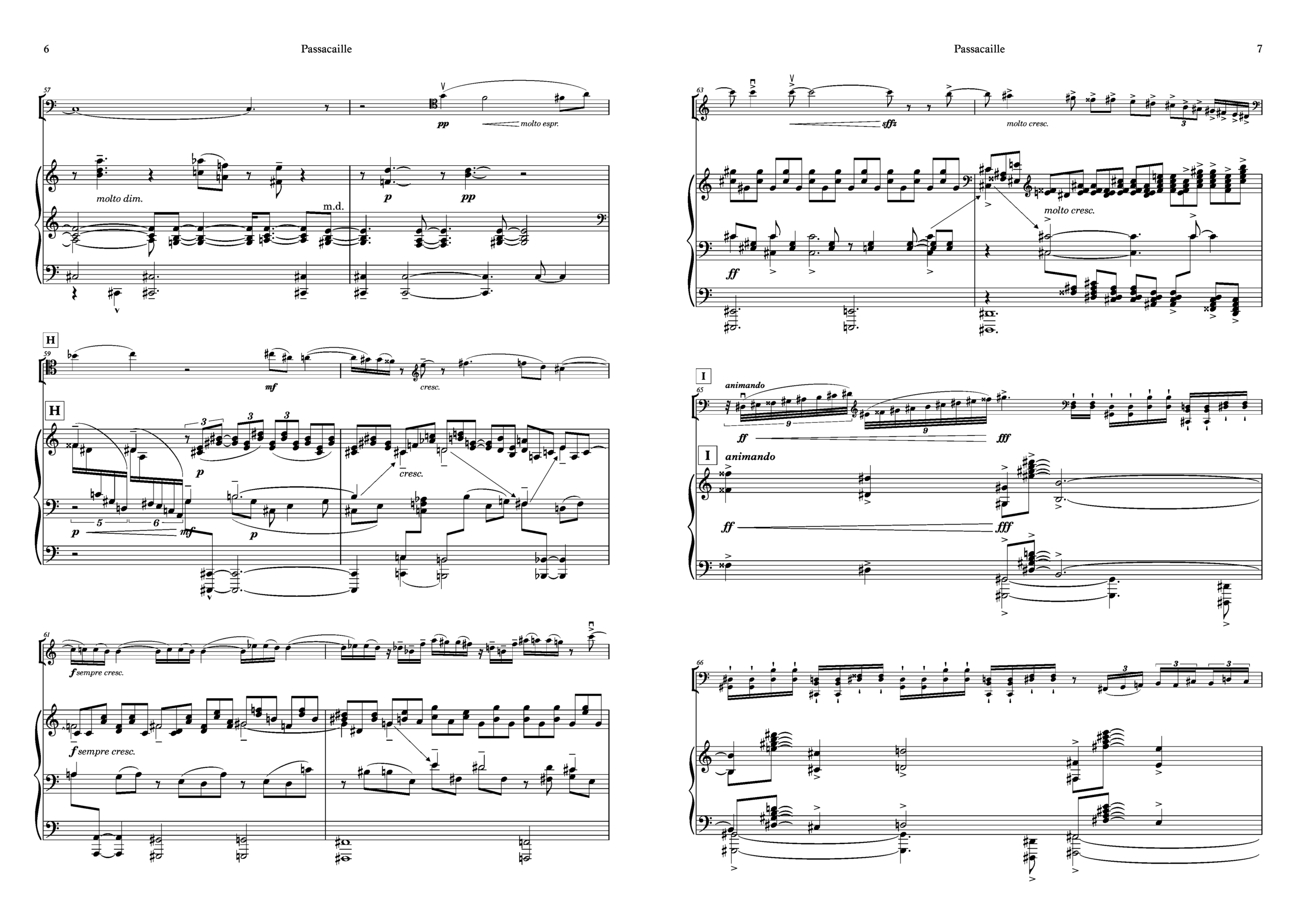
Pages 6–7 of “Diptyque” – Cello & Piano, Jean-Yves Malmasson. #MadeWithDorico
AN: When working on these scores, how does Dorico fit into your creative process?
JM: I have only been using Dorico for a relatively short time, I must say – almost two years now. I have not yet composed a new work entirely with Dorico. However, I have already done many arrangements and orchestrations. That said, I have always used music notation software in the same way that I used to use paper and pencil. The audio feature obviously helps to give an immediate idea of how the score will sound, but the musical idea always comes first in my head, and I still use the piano if I want to check a harmony or a melodic turn. Nevertheless, the ease and speed with which scores can be entered into Dorico, through a MIDI keyboard, is an asset.
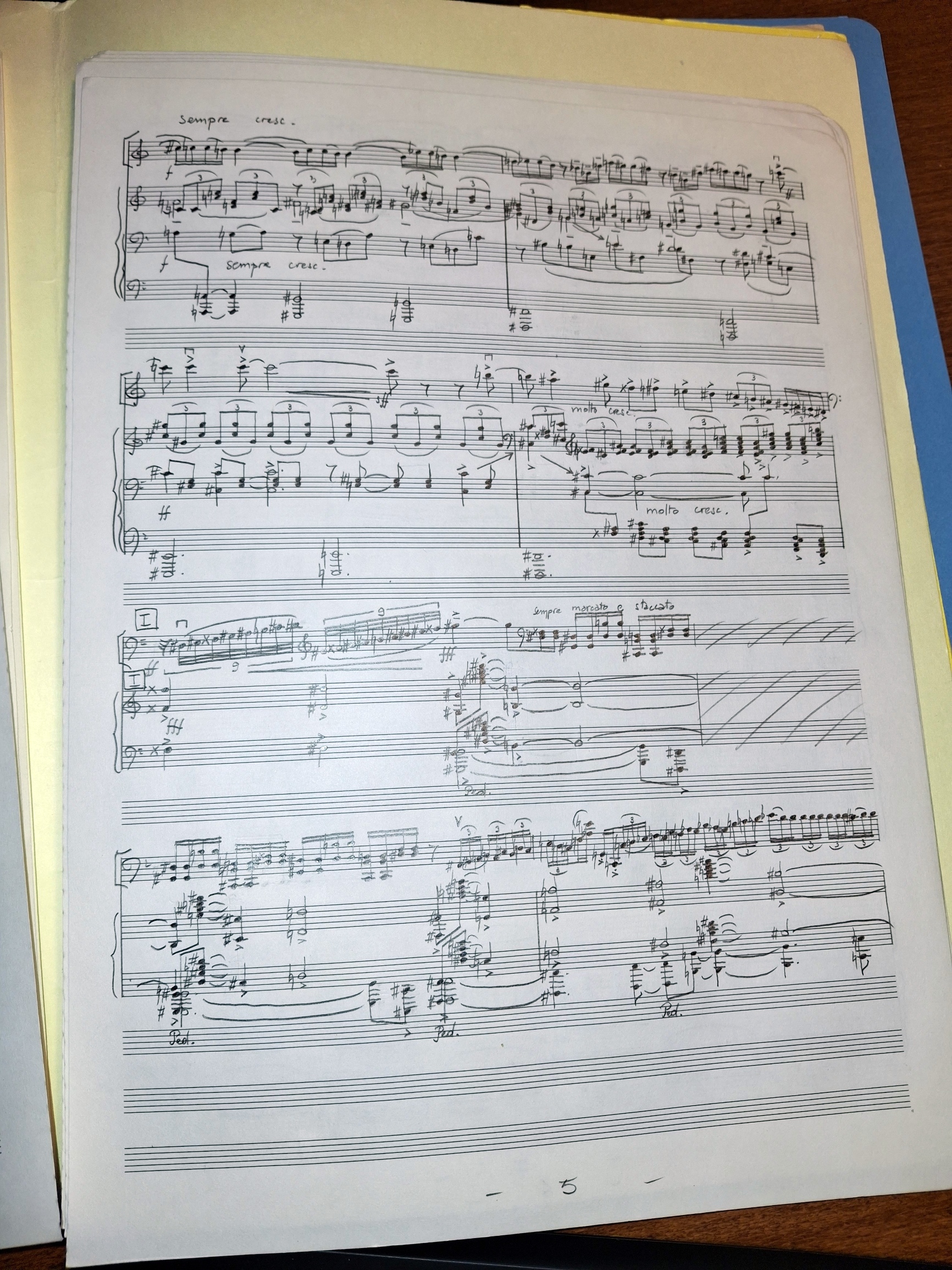
Jean‑Yves Malmasson’s handwritten score
AN: Were there any specific Dorico features that helped you overcome challenges or made your work faster and easier?
JM: I have been using Finale for over thirty years. When MakeMusic announced that it was discontinuing development of Finale, like many of my colleagues, I panicked! I would have to change software, relearn everything, acquire new reflexes, and get used to a new software environment. Then, following recommendations to switch to Dorico, I tried the software and was immediately reassured and won over. I must say that I benefited from numerous online tutorials and tips, particularly the invaluable and instructive ones from Alexis Savelief on his website and YouTube channel, to whom I am very grateful and to whom I would like to pay tribute. I also made extensive use of the French online help, which is clear, comprehensive and well done. Although I am not yet an expert and still have a lot to learn and discover about the use and power of Dorico, I think that, thanks to these various learning tools, I have quickly acquired sufficient mastery to work very efficiently.
In addition to the ease and speed of input, I would say that the two features that seem most essential to me in Dorico are condensing and the management of separate parts. These two aspects were very cumbersome and rather tedious to achieve with Finale, but with Dorico it is much more efficient and faster. This is one of the reasons why I am currently busy reworking most of my old scores with Dorico, to produce a clean and complete edition. It is also an excellent opportunity to revise these scores.
AN: What advice would you give to composers who are aiming for publication?
JM: I’m not sure I’m able or authorized to give any advice on this subject. As far as I’m concerned, the Scodo platform provided by Universal Edition gave me access to this major publisher. It’s undoubtedly a new and somewhat indirect way of achieving this compared to traditional methods, but it’s true that the process of getting signed by a publisher is often long and difficult.
AN: Thanks for taking the time to talk to us, Jean-Yves!
Explore Jean-Yves Malmasson’s works published by Universal Edition here
That’s fascinating! It sounds like the transition from Finale to Dorico was a really smooth process for you, especially with the help of the Scodo platform and those tutorials. The condensing and part management features sound incredibly helpful for reworking existing pieces – I can see why that’s a big advantage.